Don’t throw away those leftover mashed potatoes! Turn them into incredibly crispy, cheesy Loaded Mashed Potato Pancakes. An easy, comfort-food appetizer or side dish ready in minutes.
Introduction: My Favorite Excuse to Make Extra Potatoes
Honestly, I used to dread figuring out what to do with leftover mashed potatoes. I usually just end up microwaving them the next day, but they never have that same fluffy, fresh-from-the-pot magic. It wasn’t until I had a mountain of leftovers after a Sunday dinner that I decided to experiment and throw them into a hot skillet.
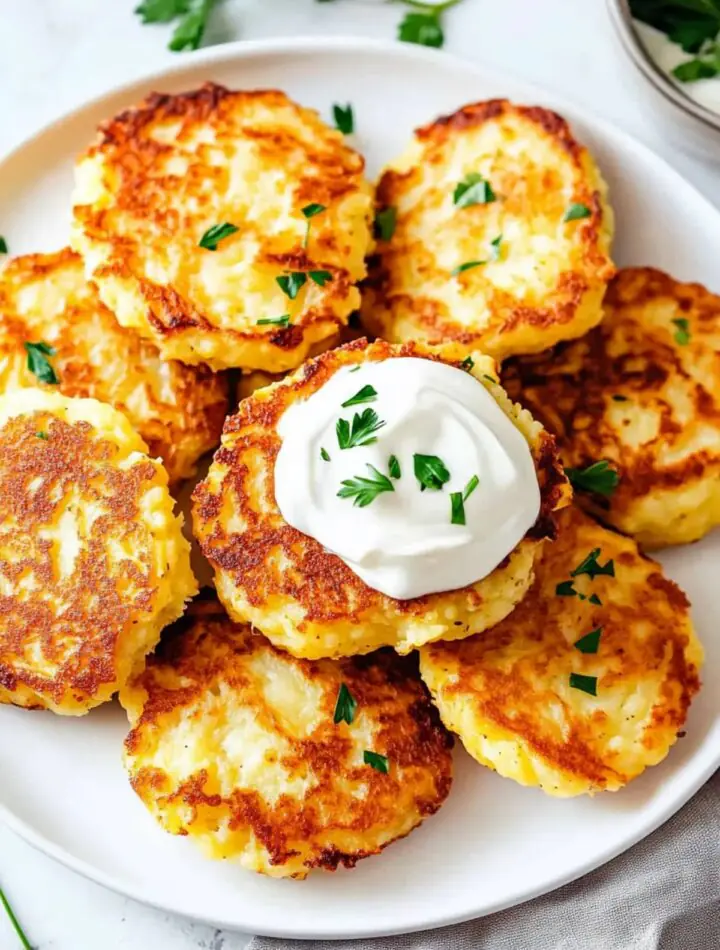
Let me tell you, it was a total game-changer. By adding a little cheese, a binder, and pan-frying them in butter, they transform into these golden, crispy-on-the-outside, creamy-on-the-inside potato bites. If you take one look at image_c99084.jpg, you can see exactly why I now intentionally make twice as many mashed potatoes as I need just so I can make these the next day! They have all the flavor of a fully loaded baked potato, but packed into a perfectly crispy, snackable pancake. Grab your skillet, and let’s bring those leftovers back to life!
Ingredients List
Here is what you’ll need to make these savory little bites of heaven:
For the Potato Pancakes:
-
2 cups Leftover mashed potatoes (crucial tip: they must be cold from the fridge!)
-
1 large Egg (lightly beaten)
-
1/4 cup All-purpose flour (plus a little extra if your potatoes are very wet)
-
1/2 cup Sharp cheddar cheese (freshly shredded melts best)
-
1/4 cup Green onions or chives (finely chopped)
-
2 tablespoons Butter or vegetable oil (for pan-frying)
-
Salt and black pepper to taste (adjust based on how seasoned your leftovers already are)
For the “Loaded” Toppings:
-
A dollop of sour cream
-
Crispy bacon bits
-
A sprinkle of fresh green onions or chives
Step-by-Step Method
1. Prep the Mixture In a large mixing bowl, combine your cold leftover mashed potatoes, the lightly beaten egg, flour, shredded cheddar cheese, and chopped green onions. Gently fold everything together until it is just combined. Take a tiny taste (if your egg is pasteurized) or smell it to see if you need an extra pinch of salt and pepper.
2. Form the Patties Scoop out roughly 2 to 3 tablespoons of the potato mixture. Roll it into a ball between your palms, and then gently flatten it into a neat little patty, about 1/2-inch thick. If the mixture is sticking to your hands too much, lightly dust your hands with a little flour.
3. Heat the Skillet Place a large non-stick skillet or cast-iron pan over medium heat. Add your butter or vegetable oil. You want the pan nice and hot so the potatoes sizzle immediately when they hit the fat.
4. Pan-Fry to Golden Perfection Carefully place the potato patties into the hot skillet. Give them some breathing room—don’t overcrowd the pan! Let them cook undisturbed for about 3 to 4 minutes. You are looking for a beautiful, crispy golden-brown crust to form on the bottom.
5. The Flip Slide a thin spatula under the pancakes and gently flip them over. Cook for another 3 to 4 minutes on the second side until they are uniformly golden and heated all the way through.
6. Garnish and Devour Transfer the hot potato pancakes to a serving platter. Immediately top each one with a small spoonful of sour cream, a sprinkle of crispy bacon bits, and some fresh green onions. Serve them piping hot!
My Top Cooking Tips
-
Cold potatoes are non-negotiable: Honestly, if you try to make these with warm or freshly made mashed potatoes, they will turn into a mushy disaster in the pan. The potatoes need to be chilled so the starches firm up and hold their shape.
-
Don’t rush the flip: It is so tempting to poke and prod them, but leave them alone! Letting them sit undisturbed allows that critical crispy crust to form, which holds the pancake together when you flip it.
-
Adjust the flour: Every batch of mashed potatoes has a different moisture level depending on how much milk or butter you added originally. If your mixture feels too wet to hold a patty shape, just sprinkle in an extra tablespoon of flour until it binds.
Serving Suggestions
-
Breakfast Upgrade: Serve these alongside sunny-side-up eggs and a few slices of bacon for a hearty weekend breakfast. They are basically a creamier version of hash browns!
-
Steakhouse Side: Pair them with a juicy grilled ribeye or roasted chicken as a fun alternative to a standard baked potato.
-
Party Appetizer: Make them bite-sized (about 1 tablespoon of mixture each) and serve them on a platter as elegant, savory hors d’oeuvres.
Nutrition Information (Approximate per pancake, yields about 8)
-
Calories: 145 kcal
-
Carbohydrates: 12g
-
Protein: 4g
-
Fat: 9g
-
Sodium: 210mg
-
Fiber: 1g
Conclusion
These Loaded Mashed Potato Pancakes are absolute proof that leftovers don’t have to be boring. They are crispy, comforting, and incredibly easy to whip up on a busy weeknight. Once you try making these, I guarantee you’ll be cooking extra potatoes on purpose from now on. I can’t wait for you to try them in your own kitchen!
Frequently Asked Questions (FAQs)
1. Can I use instant mashed potatoes for this recipe? Yes, you can! Just make sure to prepare the instant potatoes according to the package directions, let them cool down completely in the fridge, and then proceed with the recipe as written.
2. Why are my potato pancakes falling apart in the pan? This usually happens for two reasons: the mashed potatoes weren’t cold enough, or the mixture was too wet. Make sure you are using fully chilled potatoes, and don’t be afraid to add an extra sprinkle of flour if the dough feels too sticky to hold together.
3. Can I bake these instead of frying them? You can, though they won’t get quite as delightfully crispy as they do in a skillet. To bake, place them on a parchment-lined baking sheet sprayed with oil. Bake at 400°F (200°C) for about 20-25 minutes, flipping halfway through, until golden.
4. How long do these keep in the fridge? Cooked potato pancakes will stay good in the fridge for up to 3 days in an airtight container. To reheat them, just pop them back into a warm skillet for a few minutes on each side to restore their crispy texture (avoid the microwave, or they will get soggy).
5. Can I make these gluten-free? Absolutely! Simply swap the all-purpose flour for your favorite 1:1 gluten-free baking blend or even a little bit of cornstarch to act as the binder.