Learn how to make homemade sesame bagels with a chewy center, golden crust, and plenty of toasted sesame seeds. An easy bagel recipe perfect for breakfast or brunch.
Homemade Sesame Bagels
Honestly, there is something so satisfying about making bagels at home. The first time I made them, I expected the process to be complicated, but once I got the hang of shaping and boiling them, it became one of my favorite baking projects.
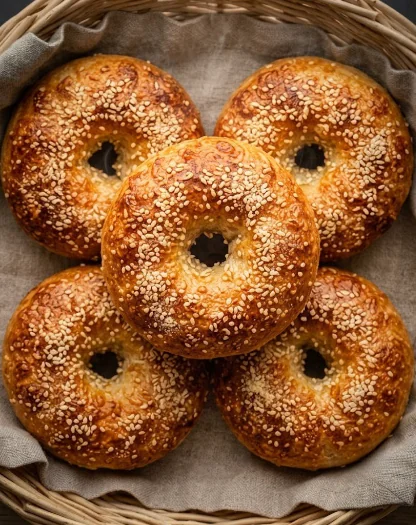
These homemade sesame bagels have that classic chewy texture with a beautifully golden, slightly crisp outside. The sesame seeds toast as the bagels bake, giving them a nutty flavor that makes them hard to resist.
I usually make a batch on the weekend and keep a few for quick breakfasts during the week. They are fantastic toasted with cream cheese, butter, avocado, or even a fried egg.
Ingredients
For the Bagel Dough
- 4 cups (500 g) bread flour
- 1 ½ cups (360 ml) warm water
- 2 ¼ teaspoons (1 packet) active dry yeast
- 1 tablespoon honey or granulated sugar
- 1 ½ teaspoons salt
- 1 tablespoon olive oil or vegetable oil
For Boiling
- 8 cups water
- 1 tablespoon honey or brown sugar
- 1 tablespoon baking soda, optional
For Topping
- ½ cup sesame seeds
- 1 egg white
- 1 tablespoon water
How to Make Sesame Bagels
1. Activate the Yeast
In a large bowl, combine the warm water, yeast, and honey.
Let the mixture sit for about 5–10 minutes, until the yeast becomes slightly foamy.
If your yeast doesn’t foam at all, check that the water wasn’t too hot or cold and that the yeast is still active.
2. Make the Dough
Add the bread flour, salt, and olive oil to the yeast mixture.
Stir until a rough dough forms.
Transfer the dough to a lightly floured surface and knead for about 8–10 minutes, until it becomes smooth and elastic.
I usually know it’s ready when the dough feels soft and springs back slightly when I press it with my finger.
3. Let the Dough Rise
Place the dough in a lightly oiled bowl and cover it with a clean kitchen towel or plastic wrap.
Let it rise in a warm place for approximately 1 hour, or until it has noticeably increased in size.
4. Divide the Dough
Punch the dough down gently to release excess air.
Divide it into 8 equal pieces.
Shape each piece into a smooth ball.
5. Shape the Bagels
There are two easy ways to make the bagel hole.
You can poke your thumb through the center of each dough ball and gently stretch the opening until it is about 1½–2 inches wide.
Or roll each piece into a rope, then pinch the ends together to form a ring.
Make sure the center hole is fairly large because it will shrink slightly during boiling and baking.
6. Prepare the Boiling Water
Bring a large pot of water to a gentle boil.
Add the honey or brown sugar and baking soda if using.
Reduce the heat slightly so the water stays at a gentle boil.
7. Boil the Bagels
Carefully place 2–3 bagels into the water at a time.
Boil for about 45–60 seconds per side.
I usually avoid overcrowding the pot because the bagels need enough room to move around.
Remove them with a slotted spoon and place them on a parchment-lined baking sheet.
8. Add the Sesame Seeds
Whisk together the egg white and 1 tablespoon of water.
Lightly brush the tops of the boiled bagels with the egg wash.
Immediately sprinkle generously with sesame seeds.
You can add a little extra sesame if you love a really nutty, crunchy topping.
9. Bake
Preheat your oven to 425°F (220°C).
Bake the bagels for approximately 20–25 minutes, or until they are deeply golden brown and cooked through.
Rotate the baking sheet halfway through if your oven browns unevenly.
10. Cool and Serve
Transfer the bagels to a wire rack and allow them to cool for at least 15–20 minutes before slicing.
Honestly, the hardest part is waiting! The smell of freshly baked sesame bagels makes it very tempting to cut one open immediately.
Cooking Tips
Use bread flour
Bread flour has more protein than regular all-purpose flour, which helps give homemade bagels their signature chewy texture.
Don’t skip the kneading
Proper kneading develops the gluten that gives bagels their characteristic chew.
Don’t make the holes too small
The holes shrink during boiling and baking, so make them slightly larger than you think you need.
Boil before baking
This is what gives bagels their distinctive chewy crust. Skipping the boiling step will result in something closer to a regular bread roll.
Keep the water at a gentle boil
A very aggressive boil can damage the bagels or make them difficult to handle.
Use plenty of sesame seeds
Brush the bagels and add the sesame seeds while they’re still wet so the seeds stick properly.
Easy Bagel Variations
Once you have the basic dough down, there are so many ways to change things up.
- Everything Bagels: Use everything bagel seasoning instead of sesame seeds.
- Poppy Seed Bagels: Replace the sesame seeds with poppy seeds.
- Garlic Bagels: Add dried garlic flakes to the topping.
- Cinnamon Raisin: Add cinnamon and raisins to the dough and skip the savory topping.
- Cheese Bagels: Sprinkle shredded cheddar over the tops before baking.
What to Serve With Sesame Bagels
I usually toast these bagels and keep the toppings simple.
Try them with:
- Cream cheese
- Butter
- Avocado
- Smoked salmon
- Fried or scrambled eggs
- Turkey and cheese
- Tomato and cucumber
- Peanut butter and honey
- Jam or fruit preserves
For a weekend brunch, a platter of toasted bagels with cream cheese, eggs, fresh fruit, and smoked salmon is always a winner.
Storage and Freezing
Homemade bagels are best enjoyed fresh, but you can store them in an airtight bag or container at room temperature for 2–3 days.
For longer storage, slice the bagels in half and freeze them in freezer-safe bags for up to 3 months.
You can toast them directly from frozen, which is especially convenient for busy mornings.
Nutrition Information
Approximate nutrition per bagel:
- Calories: 290
- Protein: 10 g
- Carbohydrates: 55 g
- Fat: 4 g
- Fiber: 2 g
- Sugar: 3 g
- Sodium: 470 mg
Nutrition information is an estimate and will vary depending on the exact ingredients and amount of sesame seeds used.
Frequently Asked Questions
1. Why do homemade bagels need to be boiled?
Boiling sets the outside of the dough before baking. This creates the chewy crust and distinctive texture that makes a bagel different from ordinary bread.
2. Can I use all-purpose flour instead of bread flour?
Yes. All-purpose flour will work, although the bagels may be slightly less chewy. Bread flour is preferred when you want a classic bagel texture.
3. Why did my bagels become flat?
This can happen if the dough is over-proofed, the bagels are handled too roughly, or the dough isn’t developed enough during kneading. Try keeping the rise time moderate and handling the shaped bagels gently.
4. Can I prepare the bagels the night before?
Yes. For a convenient breakfast, shape the bagels and refrigerate them overnight, covered well. Let them sit at room temperature briefly if needed before boiling and baking.
5. How can I make my bagels extra chewy?
Use bread flour, knead the dough thoroughly, avoid adding too much water, and don’t skip the boiling step. A longer, slower rise can also develop more flavor and texture.
Final Thoughts
These homemade sesame bagels are honestly worth the little bit of extra effort. Once you bite through that golden sesame-covered crust and reach the chewy, soft center, you’ll understand why homemade bagels are so special.
I usually make a full batch because they freeze beautifully, and having homemade bagels ready to toast on a busy morning makes breakfast feel much easier. Add cream cheese, butter, eggs, or your favorite sandwich fillings, and you’ve got a simple breakfast that feels like a treat.