
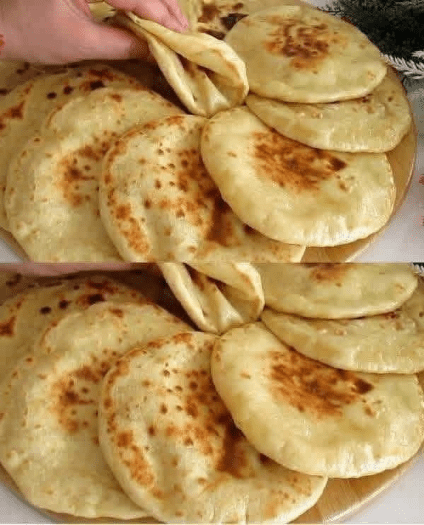
Learn how to make soft, golden Pan-Fried Flatbread at home with simple ingredients. These tender, lightly crisp flatbreads are perfect for breakfast, snacks, or serving with your favorite meal.
Introduction
Honestly, homemade flatbread is one of those recipes I never get tired of making. There’s something so satisfying about watching a simple piece of dough turn into a warm, golden, slightly crispy bread right in the pan.
I usually make these Soft Pan-Fried Flatbreads when I want something fresh to serve with a meal but don’t feel like turning on the oven. The outside gets beautifully golden with little toasted spots, while the inside stays soft and tender.
They’re also incredibly versatile. You can enjoy them plain with butter, use them to scoop up curries and stews, or fill them with cheese, potatoes, vegetables, or cooked meat. Once you get comfortable with the dough, you’ll probably find yourself making them all the time!
Ingredients
- 3 cups all-purpose flour
- 1 teaspoon salt
- 1 tablespoon sugar
- 1 cup warm water, plus a little more if needed
- 2 tablespoons vegetable oil or olive oil
- 2 tablespoons plain yogurt
- 1 tablespoon melted butter, for brushing
- Extra flour, for rolling
- Oil, for cooking
Optional Additions
For extra flavor, you can add:
- ½ teaspoon garlic powder
- 1 tablespoon chopped fresh herbs
- A pinch of black pepper
- Sesame seeds
- Nigella seeds
- Extra melted butter for serving
How to Make Soft Pan-Fried Flatbread
Step 1: Make the Dough
Add the flour, salt, and sugar to a large mixing bowl.
Pour in the warm water gradually while mixing with your hand or a wooden spoon.
Add the yogurt and 2 tablespoons of oil.
Mix until a soft dough begins to form.
I usually avoid adding all the water at once because different brands of flour absorb liquid differently. You want the dough soft and smooth, but not extremely sticky.
Step 2: Knead the Dough
Transfer the dough to a lightly floured surface and knead for about 7–8 minutes.
The dough should become smooth, soft, and elastic.
If it feels too sticky, sprinkle in a little flour. If it feels dry or difficult to knead, add a teaspoon of water at a time.
Step 3: Let the Dough Rest
Place the dough in a lightly oiled bowl and cover it with a clean kitchen towel or plastic wrap.
Let it rest for approximately 30–45 minutes.
Don’t skip this step. Honestly, resting makes the dough much easier to roll and helps give the flatbreads their soft texture.
Step 4: Divide the Dough
After resting, gently knead the dough once or twice and divide it into 8 equal portions.
Roll each portion into a smooth ball.
Cover the dough balls again and let them rest for another 10 minutes.
Step 5: Roll the Flatbreads
Lightly flour your work surface.
Take one dough ball and roll it into a round approximately 6–7 inches wide.
Try not to make it paper-thin. A slightly thicker flatbread will stay soft and tender inside.
Repeat with the remaining dough balls.
Step 6: Heat the Pan
Place a heavy skillet, cast-iron pan, or nonstick frying pan over medium heat.
Once hot, lightly brush the surface with a little oil.
You don’t need a lot of oil. Just enough to lightly coat the pan.
Step 7: Cook the Flatbread
Place one rolled flatbread into the hot pan.
Cook for about 1–2 minutes, until small bubbles begin appearing on the surface and the bottom develops golden-brown spots.
Flip it over and cook the other side for another 1–2 minutes.
Press gently around the edges with a spatula if needed to help it cook evenly.
Step 8: Brush with Butter
Remove the cooked flatbread from the pan and immediately brush it lightly with melted butter.
Place it on a plate and cover it with a clean kitchen towel.
This helps trap the steam and keeps the flatbreads soft.
Continue cooking the remaining dough.
Cooking Tips
Don’t Add Too Much Flour
One of the biggest mistakes with homemade flatbread is adding too much flour. You want a soft dough rather than a stiff one.
Let the Dough Rest
I usually give the dough plenty of resting time because it makes rolling much easier and gives you a softer finished bread.
Don’t Cook on Extremely High Heat
A very hot pan can burn the outside before the inside has cooked properly. Medium to medium-high heat works best.
Keep Cooked Flatbreads Covered
As soon as each flatbread comes out of the pan, place it under a clean kitchen towel. This keeps the steam inside and prevents them from drying out.
Don’t Overcook
Once you see golden-brown spots on both sides, they’re usually ready. Overcooking can make flatbread tough and chewy.
Make Them Flavored
For a fun variation, brush the finished flatbreads with garlic butter and sprinkle them with chopped parsley or cilantro.
Serving Suggestions
These homemade flatbreads are incredibly versatile.
I usually serve them with:
- Chicken curry
- Beef stew
- Lentil soup
- Chickpea curry
- Grilled chicken
- Kebabs
- Roasted vegetables
- Hummus
- Tzatziki
- Garlic butter
- Scrambled eggs
- Cheese and vegetables
You can also slice them into wedges and serve them as a snack with dips.
Make Them Stuffed
For a heartier version, place a small amount of filling inside the dough before rolling it out.
Some delicious filling ideas include:
- Mashed spiced potatoes
- Shredded cheese
- Cooked minced beef
- Spinach and feta
- Chicken and cheese
- Mixed vegetables
Just make sure the filling isn’t too wet, or the dough can become difficult to seal and cook.
How to Store Homemade Flatbread
Allow the flatbreads to cool completely before storing them.
Place them in an airtight container or zip-top bag and keep them at room temperature for 1 day or refrigerate for up to 4 days.
To reheat, warm them in a dry skillet for about 30–60 seconds per side.
You can also microwave them for about 10–20 seconds, preferably wrapped in a slightly damp paper towel to keep them soft.
Can You Freeze Them?
Yes! These flatbreads freeze really well.
Place parchment paper between individual flatbreads and store them in a freezer-safe bag for up to 2–3 months.
Reheat directly from frozen in a skillet until warm and soft.
Nutrition Information
Approximate nutrition per flatbread, based on 8 servings:
- Calories: 220
- Protein: 5g
- Carbohydrates: 34g
- Fat: 7g
- Saturated Fat: 2g
- Fiber: 1g
- Sugar: 2g
- Sodium: 300mg
Nutrition information is an estimate and will vary depending on the exact ingredients and amount of oil or butter used.
Why You’ll Love This Flatbread Recipe
There are so many reasons I keep this recipe in my rotation:
- Simple pantry ingredients
- No oven required
- Soft and tender texture
- Golden, lightly crispy exterior
- Easy to customize
- Great with savory meals
- Perfect for stuffing
- Freezer-friendly
- Delicious fresh from the pan
And honestly, nothing beats eating one while it’s still warm!
Conclusion
These Soft Pan-Fried Flatbreads are proof that you don’t need fancy equipment or complicated ingredients to make delicious homemade bread. With a few basic ingredients and a little patience while the dough rests, you can make a whole stack of warm, golden flatbreads right on your stovetop.
I usually serve them fresh with a hearty curry, soup, or stew, but they’re just as good brushed with butter and eaten on their own. Once you’ve tried homemade flatbread this way, store-bought versions just don’t feel quite the same.
Frequently Asked Questions
1. Can I make these flatbreads without yogurt?
Yes. You can replace the yogurt with an additional tablespoon of oil and a little extra water as needed. Yogurt helps make the bread tender, but it isn’t absolutely necessary.
2. Why are my flatbreads tough?
Flatbreads can become tough if too much flour is added, the dough isn’t rested, or the bread is overcooked. Keep the dough soft, allow it to rest, and cook just until golden.
3. Can I use whole wheat flour?
Yes, but the texture will be denser. For softer flatbreads, try using half all-purpose flour and half whole wheat flour.
4. Can I prepare the dough ahead of time?
Absolutely. You can prepare the dough, cover it tightly, and refrigerate it for up to 24 hours. Let it sit at room temperature for a little while before rolling.
5. Can I make these flatbreads without oil?
You can reduce the amount of oil, but a small amount helps create a softer dough and gives the flatbreads a nicely golden exterior.