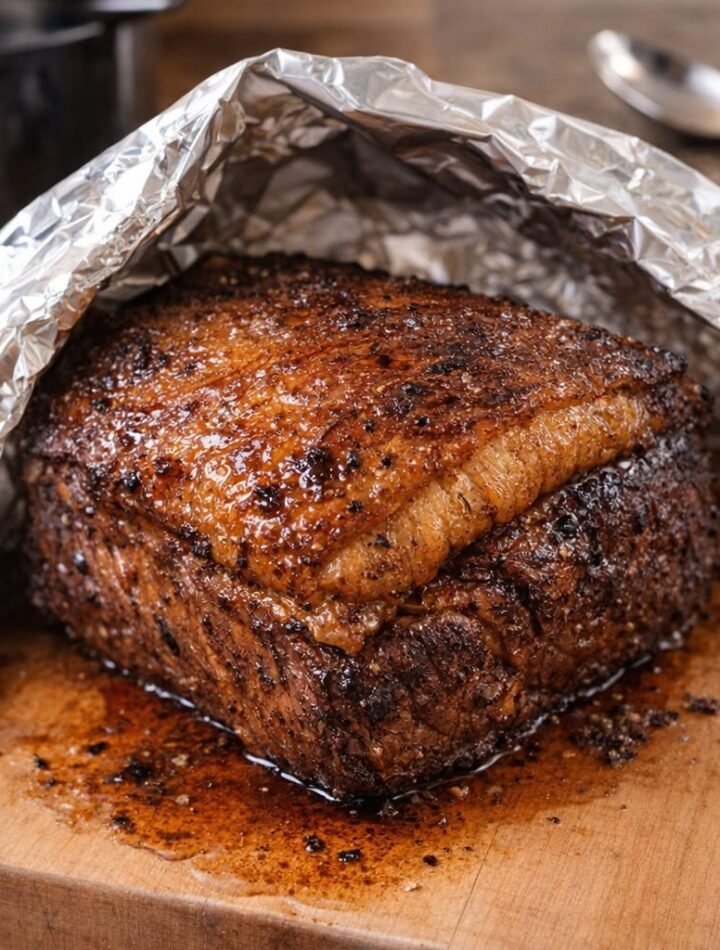
Slow-Roasted Beef Brisket
The secret is simple: low and slow cooking. A generous seasoning rub creates that dark, flavorful crust on the outside while the inside becomes tender and juicy. Honestly, the hardest part is waiting for it to finish cooking!
I like wrapping the brisket in foil for part of the cooking time because it helps keep the meat moist while all those delicious juices collect underneath. Once it’s done, let it rest before slicing. That little bit of patience makes a huge difference.
Ingredients
- 4–5 pounds beef brisket
- 2 tablespoons olive oil
- 2 tablespoons kosher salt
- 1 tablespoon black pepper
- 1 tablespoon smoked paprika
- 1 tablespoon garlic powder
- 1 tablespoon onion powder
- 1 teaspoon dried thyme
- 1 teaspoon chili powder
- 1 tablespoon Worcestershire sauce
- 4 cloves garlic, minced
- 1 large onion, sliced
- 1 cup beef broth
- 2 tablespoons brown sugar, optional
- 1 tablespoon apple cider vinegar
- Fresh parsley, for garnish
Step-by-Step Method
1. Prepare the Brisket
Remove the brisket from the refrigerator and pat it dry thoroughly with paper towels. If there is a very thick layer of fat, trim some of it away, leaving enough fat to keep the meat flavorful and moist.
2. Make the Seasoning Rub
In a small bowl, combine the salt, black pepper, smoked paprika, garlic powder, onion powder, thyme, and chili powder.
Add the Worcestershire sauce and olive oil to the seasoning mixture and stir into a thick paste.
3. Season the Meat
Rub the seasoning mixture generously over every side of the brisket. I usually spend a little extra time on this step because a good coating gives the finished brisket that delicious, flavorful crust.
For even better flavor, cover the brisket and refrigerate it for at least 4 hours, or preferably overnight.
4. Prepare the Roasting Pan
Place the sliced onion and minced garlic in the bottom of a large roasting pan.
Pour in the beef broth and apple cider vinegar. Place the seasoned brisket on top of the onions, with the fat side facing upward.
5. Slow Roast
Preheat your oven to 300°F (150°C).
Cover the roasting pan tightly with aluminum foil and place it in the oven. Roast for approximately 3½–5 hours, depending on the size and thickness of the brisket.
The goal isn’t simply to cook the meat to a certain time—the brisket should become very tender.
6. Finish Uncovered
Once the brisket is tender, carefully remove the foil. Increase the oven temperature to 400°F (200°C) and return the brisket to the oven for about 15–25 minutes.
This helps develop that gorgeous dark, caramelized crust.
7. Rest the Brisket
Remove the brisket from the oven and loosely cover it with foil. Let it rest for 20–30 minutes before slicing.
I know it’s tempting to cut into it immediately, but honestly, this resting time is worth it. It helps the juices redistribute throughout the meat.
8. Slice and Serve
Slice the brisket against the grain into thin, even pieces. Spoon some of the flavorful pan juices over the top before serving.
Cooking Tips
- Don’t skip the resting time. It helps keep the brisket juicy.
- Season generously. A large cut of beef needs plenty of seasoning.
- Cook low and slow. High heat can make the meat tough before the connective tissue has time to break down.
- Use a meat thermometer to monitor the internal temperature and doneness.
- Slice against the grain. This makes each bite much more tender.
- Don’t throw away the pan juices. They make an incredible natural gravy or sauce.
- For deeper flavor, season the brisket the night before and let it rest in the refrigerator overnight.
Serving Suggestions
There are so many good ways to serve slow-roasted brisket. I usually keep things simple with creamy mashed potatoes and roasted vegetables.
You can also serve it with:
- Creamy mashed potatoes
- Roasted carrots
- Green beans
- Coleslaw
- Mac and cheese
- Roasted potatoes
- Buttered corn
- Dinner rolls
- Rice
- Gravy made from the pan juices
Leftover brisket is also fantastic in sandwiches, tacos, wraps, or chopped into a hearty breakfast hash.
Nutrition Information
Approximate per serving, based on 8 servings:
- Calories: 520
- Protein: 52g
- Carbohydrates: 7g
- Fat: 31g
- Saturated Fat: 11g
- Fiber: 1g
- Sugar: 3g
- Sodium: 850mg
Nutrition information is an estimate and will vary depending on the cut of brisket, trimming, seasoning, and serving size.
Conclusion
This Slow-Roasted Beef Brisket is one of those recipes that proves you don’t need complicated ingredients to make an amazing meal. Give the beef plenty of seasoning, cook it slowly, and let the oven do most of the work.
I usually make extra because the leftovers are just as good the next day. Whether you serve it with mashed potatoes for Sunday dinner or turn the leftovers into sandwiches, this tender, juicy brisket is definitely a recipe worth keeping.
Frequently Asked Questions
1. How long should I cook beef brisket?
A 4–5 pound brisket generally needs around 3½–5 hours at 300°F (150°C), but cooking time varies. The most important thing is that the brisket becomes tender.
2. Should brisket be covered while cooking?
Yes. Covering the brisket helps retain moisture and creates a steamy environment that helps tenderize the meat. Removing the foil near the end allows the outside to develop a darker crust.
3. Why is my brisket tough?
Brisket contains a lot of connective tissue, so it needs enough time to break down. If it is tough, it may simply need more cooking time. Continue cooking until it becomes fork-tender.
4. Can I prepare brisket the day before?
Absolutely. In fact, brisket often tastes even better the next day. Let it cool, refrigerate it with some of its juices, then gently reheat before serving.
5. How should I slice brisket?
Always try to slice against the grain. Cutting across the muscle fibers shortens them and makes the meat much easier and more enjoyable to chew.