Slow-Braised Beef Roast in Rich Gravy
There are some meals that just feel like home, and this slow-braised beef roast is definitely one of them. Honestly, whenever I want something hearty and comforting, this is one of the recipes I come back to.
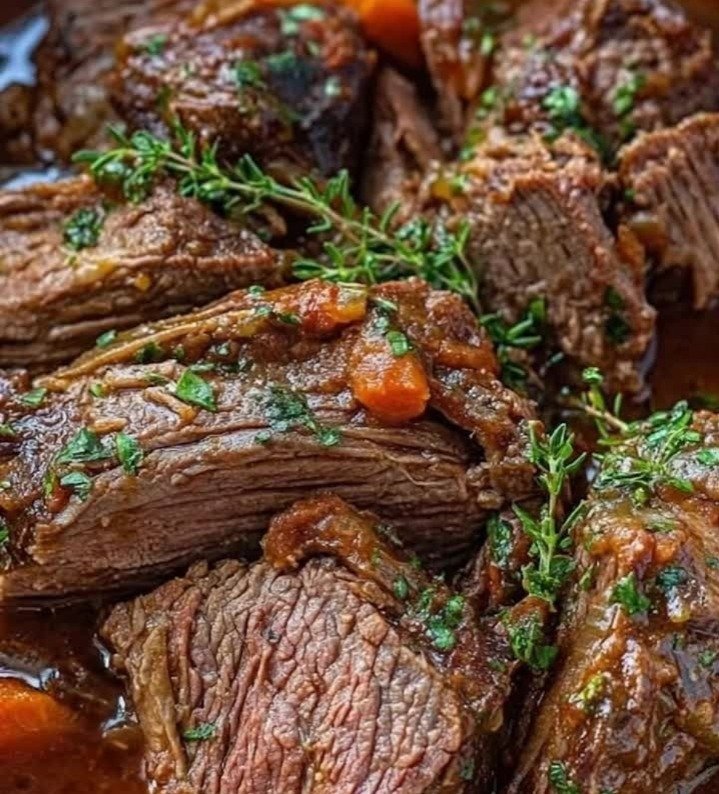
The beef is seared until beautifully browned, then slowly cooked in a rich, savory gravy with vegetables and fresh herbs. The long, gentle cooking time does most of the work—the beef becomes incredibly tender and practically falls apart with a fork.
I usually make this when I have a little extra time on the weekend. The kitchen smells amazing while it cooks, and the best part is that you end up with both tender beef and a delicious sauce to spoon over everything on your plate.
If you’re looking for an easy braised beef recipe, tender beef roast, or classic comfort food dinner, this one is worth saving.
Ingredients
For the Beef
- 3–4 pounds beef chuck roast, cut into large chunks
- 2 tablespoons olive oil
- 1½ teaspoons kosher salt
- 1 teaspoon freshly ground black pepper
- 1 teaspoon garlic powder
- 1 teaspoon paprika
For the Braising Sauce
- 1 large onion, chopped
- 4 cloves garlic, minced
- 3 medium carrots, cut into chunks
- 2 tablespoons tomato paste
- 2 cups beef broth
- 1 cup dry red wine or additional beef broth
- 1 tablespoon Worcestershire sauce
- 2–3 sprigs fresh thyme
- 2 sprigs fresh rosemary
- 2 bay leaves
- 1 tablespoon butter
- 1 tablespoon all-purpose flour, optional, for thickening
- Salt and black pepper, to taste
Step-by-Step Method
1. Prepare the Beef
Pat the beef pieces dry with paper towels. This little step makes a big difference because dry beef browns much better.
Season generously with salt, pepper, garlic powder, and paprika. Let the beef sit for about 15–20 minutes while you prepare the other ingredients.
2. Sear the Beef
Heat the olive oil in a large Dutch oven or heavy oven-safe pot over medium-high heat.
Add the beef in batches. Don’t overcrowd the pot—you want plenty of space around each piece so it can develop a deep brown crust.
Sear for about 3–4 minutes per side, until nicely browned. Transfer the beef to a plate.
Don’t skip this step. Honestly, that browned crust is where so much of the finished dish’s flavor comes from.
3. Cook the Vegetables
Reduce the heat to medium and add the onion and carrots to the same pot.
Cook for 4–5 minutes, stirring occasionally, until the onions begin to soften. Add the garlic and cook for another 30 seconds.
4. Add the Tomato Paste
Stir in the tomato paste and cook for about 1–2 minutes.
Cooking the tomato paste briefly helps deepen its flavor and gives the gravy a richer color.
5. Deglaze the Pot
Pour in the red wine, if using, and scrape the bottom of the pot with a wooden spoon.
Those browned bits stuck to the bottom are pure flavor, so make sure you loosen as much as possible.
Let the wine simmer for 2–3 minutes.
6. Build the Braising Liquid
Pour in the beef broth and Worcestershire sauce. Add the thyme, rosemary, and bay leaves.
Return the browned beef to the pot along with any juices that collected on the plate.
The liquid should come partway up the sides of the beef rather than completely covering it.
7. Slowly Braise the Beef
Cover the pot with a tight-fitting lid and place it in a preheated 325°F (165°C) oven.
Cook for approximately 2½–3½ hours, or until the beef is very tender and easily pulls apart with a fork.
Check it once or twice during cooking. If the liquid seems to be reducing too quickly, add a little more beef broth.
8. Finish the Gravy
Carefully remove the beef and vegetables from the pot.
Discard the bay leaves and herb stems. If you want a thicker gravy, place the pot over medium heat and let the liquid simmer for several minutes.
For an even thicker sauce, mix the flour with a few tablespoons of cold water to make a smooth slurry. Whisk it into the simmering gravy a little at a time until it reaches your preferred consistency.
Finish with the butter and taste for seasoning.
9. Serve
Return the beef to the gravy or arrange it on a serving platter and spoon the sauce generously over the top.
Garnish with fresh parsley or thyme if you like.
Cooking Tips for the Best Braised Beef
Choose beef chuck. Chuck roast has enough marbling and connective tissue to stay juicy during the long cooking process.
Don’t rush the searing. A good brown crust adds tremendous flavor to the finished dish.
Avoid boiling the beef. Braising should be gentle. A hard boil can make the outside of the meat tough before the connective tissue has time to break down.
Keep the lid on. A tight lid helps maintain moisture during the long cooking time.
Give it time. If the beef isn’t fork-tender after the suggested cooking time, simply continue cooking it. Tough beef often just needs more time.
Make it ahead. I actually think this tastes even better the next day. The flavors have more time to come together, and any excess fat is easier to remove once chilled.
Serving Suggestions
This rich braised beef is practically begging for something that can soak up all that gravy.
I usually serve it with:
- Creamy mashed potatoes
- Buttered egg noodles
- Roasted potatoes
- Steamed rice
- Crusty sourdough or French bread
- Roasted carrots
- Green beans
- Simple green salad
For a cozy Sunday dinner, I’d go with mashed potatoes, braised beef, roasted vegetables, and plenty of gravy. It’s simple, filling, and honestly hard to beat.
Nutrition Information
Approximate nutrition per serving, assuming 6 servings and depending on the specific beef, broth, and amount of sauce consumed.
- Calories: 520
- Protein: 45 g
- Fat: 31 g
- Carbohydrates: 12 g
- Fiber: 2 g
- Sugar: 5 g
- Sodium: 750 mg
Frequently Asked Questions
1. What is the best cut of beef for braising?
Beef chuck is one of the best choices because it contains plenty of connective tissue and marbling. During slow cooking, that connective tissue breaks down and produces incredibly tender, flavorful beef.
2. Can I make this without red wine?
Absolutely. Simply replace the red wine with an equal amount of additional beef broth. You’ll still get a rich and flavorful gravy.
3. Why is my braised beef still tough?
If the beef is tough but not dry, it probably needs more cooking time. Tough connective tissue needs time to break down. Keep the pot covered and continue cooking until the beef is fork-tender.
4. Can I make this recipe in a slow cooker?
Yes. Sear the beef and sauté the vegetables first, then transfer everything to a slow cooker. Cook on LOW for about 7–8 hours, or until the beef is tender.
5. Can I freeze leftover braised beef?
Yes. Let the beef and gravy cool completely, then store them together in an airtight freezer-safe container for up to about 3 months. Thaw overnight in the refrigerator and gently reheat on the stovetop or in the oven.
Conclusion
This slow-braised beef roast is the kind of recipe that rewards patience. There’s a little prep involved, but once everything is in the pot, the oven does most of the work.
I love how the beef becomes incredibly tender while the broth, vegetables, herbs, and browned meat combine into a rich, savory gravy. And if you have leftovers, even better—this is one of those meals that tastes fantastic the following day.
So if you’re craving a cozy braised beef dinner, grab a chuck roast, get your Dutch oven ready, and let it slowly turn into something seriously delicious.