
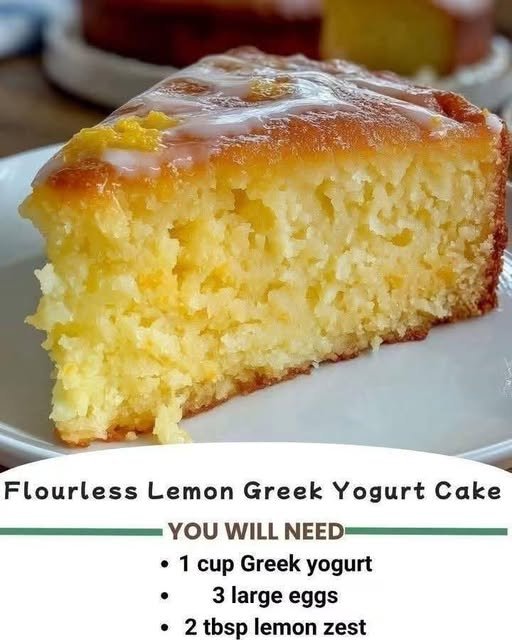
There are some cakes that look impressive but are surprisingly simple to make, and this flourless lemon Greek yogurt cake is definitely one of them.
I first fell for this style of cake because of its texture. It isn’t light and fluffy like a traditional sponge cake. Instead, it’s soft, moist, slightly dense, and almost custardy in the middle, with a lovely golden edge.
And honestly, the lemon is what makes it special. I usually use both fresh lemon zest and lemon juice because the zest gives the cake that intense lemon aroma while the juice adds a clean, slightly tangy flavor.
The Greek yogurt keeps the cake incredibly tender, while almond flour gives it a delicate, almost melt-in-your-mouth texture. There’s no wheat flour involved, so it’s also a naturally gluten-free cake when made with certified gluten-free ingredients.
It’s the kind of cake I like to make when I want something homemade without spending half the afternoon in the kitchen.
Ingredients
For the Lemon Greek Yogurt Cake
-
1 cup plain Greek yogurt, preferably full-fat
-
1 ½ cups fine almond flour
-
¾ cup granulated sugar
-
3 large eggs
-
2 tablespoons finely grated fresh lemon zest — about 2 lemons
-
¼ cup fresh lemon juice
-
¼ cup melted unsalted butter, cooled slightly
-
1 teaspoon vanilla extract
-
1 ½ teaspoons baking powder
-
¼ teaspoon baking soda
-
¼ teaspoon salt
For the Simple Lemon Glaze
-
¾ cup powdered sugar
-
1–2 tablespoons fresh lemon juice
-
1 teaspoon lemon zest, optional
How to Make Flourless Lemon Greek Yogurt Cake
1. Prepare the pan
Preheat your oven to 350°F (175°C).
Grease an 8-inch round cake pan and line the bottom with parchment paper. I usually grease the parchment lightly too, just to make sure the cake comes out without any drama.
2. Combine the wet ingredients
In a large mixing bowl, whisk together the Greek yogurt, sugar, eggs, lemon zest, lemon juice, melted butter, and vanilla.
Don’t worry about getting a huge amount of air into the mixture. This isn’t a sponge cake, so a simple whisk is all you need.
3. Mix the dry ingredients
In another bowl, stir together the almond flour, baking powder, baking soda, and salt.
If your almond flour has a few lumps, give it a quick whisk or sift it. This helps create a more even crumb.
4. Make the batter
Add the dry ingredients to the yogurt mixture.
Fold everything together with a spatula until just combined. The batter will be fairly thick and creamy.
Don’t overmix. Once you no longer see dry almond flour, you’re done.
5. Bake
Pour the batter into your prepared pan and smooth the top.
Bake for approximately 35–45 minutes, or until the top is golden and a toothpick inserted near the center comes out with a few moist crumbs attached.
The middle may still look slightly soft when the cake first comes out. That’s perfectly fine. It will continue to set as it cools.
6. Cool completely
Let the cake cool in the pan for about 15–20 minutes.
Then carefully run a knife around the edge and transfer it to a wire rack to cool completely.
I know it’s tempting to cut into it immediately, but give it time. The texture becomes noticeably better as it cools.
7. Add the lemon glaze
For the glaze, whisk powdered sugar with enough lemon juice to create a smooth, pourable consistency.
Drizzle it over the completely cooled cake and sprinkle with a little extra lemon zest if you’d like.
Then slice and enjoy!
Cooking Tips for the Best Lemon Yogurt Cake
Use fresh lemons
This is one recipe where fresh lemon really matters. Bottled lemon juice won’t give you the same bright flavor.
Since you’re already zesting the lemons, zest them before squeezing them.
Use full-fat Greek yogurt
Full-fat yogurt gives the cake a richer texture and helps keep it moist. Low-fat yogurt can work, but the finished cake may be slightly less creamy.
Don’t substitute regular flour
The almond flour is an important part of the recipe. Regular wheat flour absorbs liquid differently and will change the texture considerably.
Don’t overbake it
This is probably the biggest tip I can give you.
The cake should be golden around the edges and set through the center, but it shouldn’t be baked until completely dry. A few moist crumbs on the toothpick are ideal.
Let it cool
Because this cake contains Greek yogurt and almond flour, the crumb firms up considerably as it cools.
Honestly, I think it tastes even better a few hours later.
Want an even stronger lemon flavor?
Add another teaspoon of finely grated lemon zest. You can also brush the warm cake with a tablespoon or two of fresh lemon juice before glazing.
Serving Suggestions
This cake is lovely all by itself, but there are plenty of ways to serve it.
-
Dust the top with powdered sugar instead of using glaze.
-
Serve with a spoonful of Greek yogurt or whipped cream.
-
Add fresh berries such as strawberries, raspberries, or blueberries.
-
Serve with a little homemade lemon curd.
-
Add toasted sliced almonds for extra crunch.
-
For dessert, serve slightly chilled with a scoop of vanilla ice cream.
For breakfast or afternoon tea, I usually just slice it and have it with coffee. The lemon flavor makes it feel fresh rather than overly rich.
How to Store It
Keep the cooled cake in an airtight container.
Because it contains Greek yogurt, I recommend refrigerating it if you’re keeping it for more than a day.
It should keep well in the refrigerator for about 4–5 days. Bring individual slices toward room temperature before serving, or enjoy them chilled if you prefer a firmer texture.
You can also freeze individual slices for up to about 2 months. Wrap them well and thaw overnight in the refrigerator.
Approximate Nutrition Information
Based on 10 servings and including the simple lemon glaze; actual values will vary depending on the brands and ingredients used.
| Nutrient | Approx. per serving |
|---|---|
| Calories | 285 kcal |
| Protein | 9 g |
| Carbohydrates | 25 g |
| Fat | 18 g |
| Saturated Fat | 5 g |
| Fiber | 2 g |
| Sugar | 19 g |
Frequently Asked Questions
1. Is this lemon yogurt cake gluten-free?
Yes. The recipe contains no wheat flour and uses almond flour instead. If you need the cake to be strictly gluten-free, check that your baking powder, yogurt, and other packaged ingredients are certified gluten-free.
2. Can I use almond meal instead of almond flour?
Yes. Almond meal will work, although the cake may have a slightly more rustic texture. For the smoothest, most delicate crumb, I prefer finely ground blanched almond flour.
3. Can I use low-fat Greek yogurt?
You can, but full-fat Greek yogurt gives the cake a richer and more tender texture. If possible, I’d stick with full-fat for this recipe.
4. Why did my cake sink slightly in the middle?
A small amount of sinking can be completely normal with a moist, yogurt-based cake. It can happen if the center hasn’t fully set before the cake is removed from the oven or if the oven temperature is a little low.
Make sure the center is set and a toothpick comes out with moist crumbs rather than wet batter.
5. Can I make this cake without the glaze?
Absolutely. The cake has plenty of lemon flavor on its own. A simple dusting of powdered sugar is an easy alternative, or you can leave it plain and serve it with berries and Greek yogurt.
Final Thoughts
If you love lemon desserts, this flourless lemon Greek yogurt cake is one I’d definitely keep in the recipe box.
I love that it doesn’t require complicated techniques or unusual ingredients. The Greek yogurt keeps it moist, almond flour gives it that wonderfully tender texture, and fresh lemon brings everything together.