
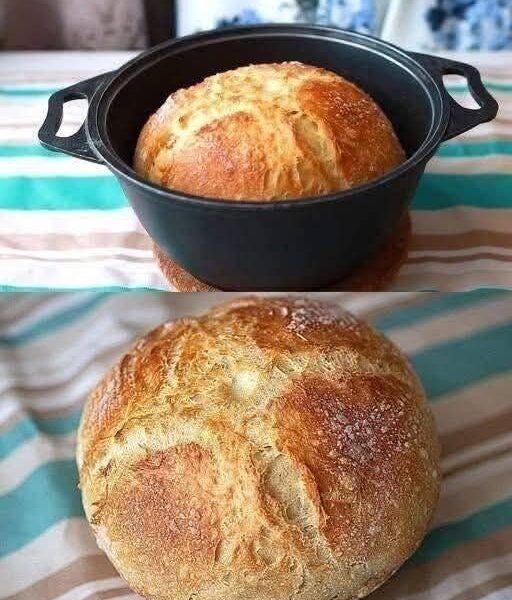
This Dutch oven artisan bread is the ultimate homemade bakery-style loaf — crispy on the outside, soft and airy on the inside, and made with just four simple ingredients. If you’ve ever wanted to make rustic sourdough-style bread without a starter, this no-knead bread recipe is your perfect starting point.
Baked in a heavy cast iron Dutch oven, the enclosed heat creates steam, giving you that professional-quality crust you’d normally only get from a commercial bread oven. This recipe is ideal for beginners, meal prep, or anyone looking for an affordable homemade bread option with gourmet results.
📝 Ingredients
-
3 cups all-purpose flour (or bread flour for chewier texture)
-
1 ½ teaspoons salt
-
½ teaspoon instant yeast (or active dry yeast)
-
1 ½ cups warm water (about 110°F / 43°C)
-
Extra flour for dusting
Optional Add-ins:
-
1 tablespoon olive oil (for softer crumb)
-
1 teaspoon sugar (to activate yeast faster)
-
Fresh herbs, roasted garlic, or shredded cheese
👩🍳 Instructions
Step 1: Mix the Dough
In a large bowl, combine flour, salt, and yeast. Add warm water and mix until a sticky dough forms. No kneading required — just stir until fully combined.
Step 2: First Rise (8–12 Hours)
Cover the bowl with plastic wrap or a clean towel. Let the dough rest at room temperature for 8–12 hours (overnight is ideal). The dough will double in size and develop bubbles on the surface.
Step 3: Shape the Dough
Lightly flour a surface and turn out the dough. Fold it over onto itself 2–3 times, shaping it into a round ball. Let it rest for 30 minutes while your oven preheats.
Step 4: Preheat the Dutch Oven
Place your Dutch oven (with lid) inside the oven and preheat to 450°F (230°C) for at least 30 minutes. This step is crucial for achieving a crispy crust.
Step 5: Bake the Bread
Carefully remove the hot Dutch oven. Place the dough inside (you can use parchment paper for easier transfer). Cover with the lid and bake for 30 minutes.
Remove the lid and bake an additional 10–15 minutes until golden brown.
Step 6: Cool Before Slicing
Transfer bread to a wire rack and cool for at least 1 hour before slicing. This allows the crumb to set properly.
🔥 Why Bake Bread in a Dutch Oven?
A cast iron Dutch oven traps steam released from the dough during baking. Steam keeps the crust soft initially, allowing the bread to expand (oven spring), then creates that signature crispy exterior.
This method mimics professional bakery ovens, making it one of the best homemade artisan bread techniques.
🍽️ Serving Ideas
-
Serve warm with butter and sea salt
-
Pair with soups, stews, or pasta
-
Use for gourmet grilled cheese sandwiches
-
Make avocado toast or bruschetta
-
Slice thick for French toast
🥖 Pro Baking Tips
-
Use bread flour for a chewier texture
-
Score the top before baking for decorative design
-
Add a small ice cube between parchment and pot edge for extra steam
-
Store in a paper bag to maintain crust texture
💰 High CPM Related Questions (SEO Optimized)
1. What is the best Dutch oven for baking bread?
Heavy cast iron Dutch ovens from brands like Lodge or Le Creuset provide excellent heat retention and are ideal for artisan bread baking.
2. Can I make no-knead bread without a Dutch oven?
Yes. Use a covered oven-safe pot or create steam by placing a pan of hot water in the oven during baking.
3. Is homemade bread cheaper than store-bought?
Yes. Making bread at home significantly reduces grocery costs, especially with rising food prices and inflation trends.
4. Can I use whole wheat flour?
Yes, but replace only up to 50% with whole wheat to maintain softness.
5. Why is my bread dense instead of airy?
Common reasons include expired yeast, insufficient rising time, or too much flour.
6. How do I store homemade artisan bread?
Store at room temperature for up to 3 days. Avoid refrigerating as it dries the bread out.
7. Can I freeze homemade bread?
Yes. Slice first, wrap tightly, and freeze up to 3 months.
8. What temperature should bread be when fully baked?
Internal temperature should reach 200–210°F (93–99°C) using a digital thermometer.
9. How can I turn this into sourdough?
Replace yeast with active sourdough starter and extend fermentation time.
10. Is homemade bread healthier?
Homemade bread avoids preservatives and additives found in many commercial brands.