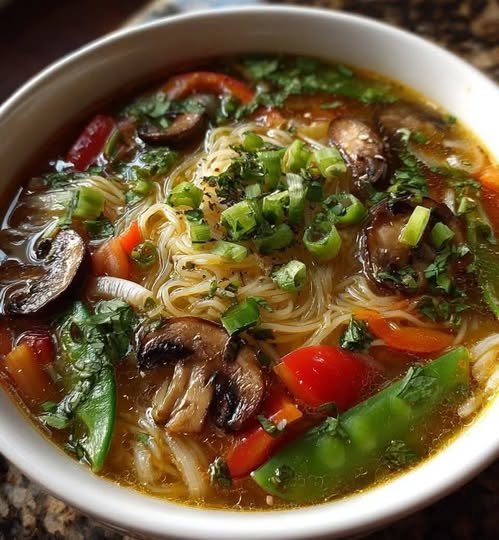
Hearty Vegetable Glass Noodle Soup
A Comforting, Healthy, and Flavor-Packed Homemade Soup Recipe
Introduction: A Bowl of Comfort and Wellness
There are few dishes as universally comforting as a warm bowl of homemade soup. The recipe you see here—Vegetable Glass Noodle Soup—is a perfect example of how simple ingredients can come together to create something nourishing, beautiful, and deeply satisfying. With its crystal-clear broth, tender glass noodles, earthy mushrooms, and vibrant vegetables, this soup is both visually appealing and incredibly wholesome.
This soup is inspired by Asian-style vegetable noodle soups, commonly enjoyed across East and Southeast Asia for their light yet flavorful profiles. It’s ideal for anyone searching for a healthy soup recipe, a low-calorie comfort food, or an easy vegetarian dinner that doesn’t sacrifice taste.
Whether you’re meal-prepping for the week, recovering from a cold, or simply craving something warm and soothing, this vegetable glass noodle soup deserves a permanent place in your recipe collection.
Why You’ll Love This Vegetable Noodle Soup
-
✅ Naturally vegetarian and vegan-friendly
-
✅ Light, yet filling
-
✅ Packed with immune-boosting vegetables
-
✅ Gluten-free (when using glass noodles)
-
✅ Perfect for weight-loss meal plans
-
✅ Easy to customize with pantry staples
This recipe is also excellent for food blogs focusing on clean eating, plant-based diets, and healthy homemade meals, making it a strong contender for high-CPM food keywords.
What Are Glass Noodles?
Glass noodles—also known as cellophane noodles or mung bean noodles—are translucent noodles made from starch (usually mung bean, sweet potato, or tapioca). When cooked, they absorb the flavors of the broth beautifully while remaining light and silky in texture.
They’re a popular ingredient in Asian soup recipes, stir-fries, and spring rolls, and they’re naturally gluten-free, making them ideal for people with dietary restrictions.
Ingredients for Vegetable Glass Noodle Soup
Core Ingredients
-
4 oz (115 g) glass noodles (mung bean noodles)
-
6 cups vegetable broth (homemade or low-sodium store-bought)
-
1 tablespoon olive oil or sesame oil
-
1 medium onion, thinly sliced
-
3 cloves garlic, minced
-
1 tablespoon fresh ginger, grated
Vegetables
-
1 cup mushrooms, sliced (button, cremini, or shiitake)
-
1 medium carrot, julienned
-
1 cup bell peppers, sliced (red and green for color)
-
1 cup snap peas or snow peas
-
1 cup spinach or bok choy
Seasonings & Garnish
-
2 tablespoons soy sauce or tamari
-
1 teaspoon black pepper
-
Salt to taste
-
2 green onions, chopped
-
2 tablespoons fresh cilantro, chopped
-
Optional: chili oil, sesame seeds, or lime wedges
Step-by-Step Instructions
Step 1: Prepare the Glass Noodles
Soak the glass noodles in warm water for 10–15 minutes until soft. Drain and set aside. This step ensures the noodles cook evenly and don’t clump in the soup.
Step 2: Build the Flavor Base
Heat olive oil or sesame oil in a large pot over medium heat. Add the sliced onions and sauté for 3–4 minutes until translucent. Stir in garlic and ginger, cooking for another 30 seconds until fragrant.
This aromatic base is essential for creating a deeply flavorful homemade vegetable soup broth.
Step 3: Add Vegetables
Add mushrooms, carrots, and bell peppers. Sauté for 4–5 minutes until the mushrooms release their moisture and the vegetables begin to soften.
Step 4: Add Broth and Simmer
Pour in the vegetable broth and bring to a gentle boil. Reduce heat and let the soup simmer for 10 minutes to allow flavors to meld.
Step 5: Add Noodles and Greens
Add the soaked glass noodles, snap peas, and spinach. Cook for 3–5 minutes until noodles are tender and greens are wilted.
Step 6: Season and Finish
Stir in soy sauce, black pepper, and salt to taste. Remove from heat and garnish with green onions and fresh cilantro.
Serve hot and enjoy a bowl of pure comfort.
Nutritional Benefits of Vegetable Glass Noodle Soup
This soup isn’t just delicious—it’s incredibly nutritious.
-
Low in calories, high in volume
-
Rich in fiber, vitamins, and antioxidants
-
Supports gut health and digestion
-
Ideal for detox and clean eating diets
-
Hydrating and easy to digest
Glass noodles provide energy without heaviness, while vegetables deliver essential micronutrients, making this one of the best healthy soup recipes for weight loss.
Variations and Customizations
Protein Add-Ins
-
Tofu cubes
-
Tempeh
-
Chickpeas
-
Edamame
Flavor Boosters
-
Miso paste
-
Lemongrass
-
Thai basil
-
Rice vinegar
Spicy Version
Add chili garlic sauce or sriracha for a spicy vegetable noodle soup that warms you from the inside out.
Storage and Meal Prep Tips
-
Store in an airtight container in the fridge for up to 3 days
-
Keep noodles separate if meal-prepping to avoid over-softening
-
Reheat gently on the stovetop for best texture
Related Questions (High-CPM SEO Focus)
Is vegetable noodle soup healthy?
Yes, vegetable noodle soup is one of the healthiest comfort foods. It’s low in fat, rich in vegetables, and provides hydration and essential nutrients.
Can I eat vegetable soup every day?
Absolutely. Homemade vegetable soup is safe and beneficial for daily consumption, especially when made with a variety of vegetables and low sodium broth.
What is the best noodle for vegetable soup?
Glass noodles, rice noodles, and whole-wheat noodles are among the healthiest options, depending on dietary needs.
Is this soup good for weight loss?
Yes. This is a low-calorie, high-volume soup that keeps you full while supporting weight management.
Can I make this soup vegan and gluten-free?
Yes. Use vegetable broth and gluten-free soy sauce or tamari to keep it 100% vegan and gluten-free.
What vegetables are best for soup?
Mushrooms, carrots, spinach, bell peppers, zucchini, cabbage, and peas are excellent vegetables for soup.
Final Thoughts
This Vegetable Glass Noodle Soup is more than just a recipe—it’s a lifestyle dish. It’s comforting yet light, simple yet deeply flavorful, and nourishing without being boring. Perfect for busy weeknights, cozy weekends, or anyone looking to embrace healthy homemade cooking.