
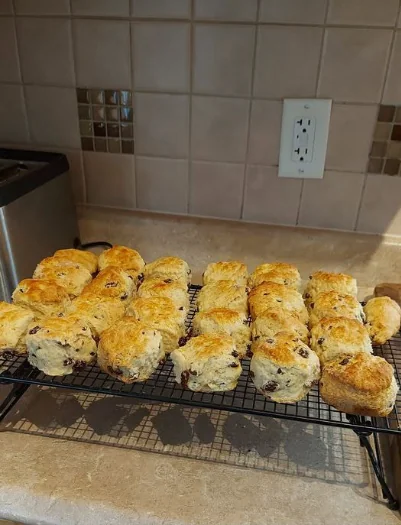
Make these classic homemade raisin scones with simple ingredients for a buttery, golden, tender treat. Perfect with tea, coffee, breakfast, or afternoon snacks!
Introduction
There’s something so comforting about a fresh batch of homemade scones sitting on the kitchen counter. Honestly, I love recipes like this because they don’t need anything fancy to taste amazing. These Classic Raisin Scones are golden on the outside, soft and tender inside, and filled with sweet little raisins in every bite.
I usually make these when I want something homemade to serve with tea or coffee, especially on a slow weekend morning. The smell of buttery scones baking in the oven is hard to beat!
The dough comes together quickly, and once the scones are baked, they’re best served warm with a little butter, jam, or even clotted cream.
Ingredients
- 3 cups all-purpose flour
- 1/3 cup granulated sugar
- 1 tablespoon baking powder
- 1/2 teaspoon salt
- 1/2 cup cold unsalted butter, cubed
- 3/4 cup raisins
- 1 large egg
- 1 cup whole milk
- 1 teaspoon vanilla extract
- 1 tablespoon milk or cream, for brushing the tops
- Optional: 1 tablespoon coarse sugar for sprinkling
Step-by-Step Method
1. Prepare the Oven
Preheat your oven to 400°F (200°C).
Line a large baking sheet with parchment paper or lightly grease it.
2. Mix the Dry Ingredients
In a large mixing bowl, whisk together the flour, sugar, baking powder, and salt.
I usually give everything a good whisk at this stage so the baking powder and salt are evenly distributed throughout the flour.
3. Cut in the Butter
Add the cold cubed butter to the flour mixture.
Using a pastry cutter, fork, or your fingertips, work the butter into the flour until the mixture looks crumbly with a few small pieces of butter still visible.
Don’t overwork it. Those little pieces of cold butter are what help create tender, flaky layers.
4. Add the Raisins
Stir the raisins into the flour and butter mixture until they’re evenly distributed.
If your raisins are particularly dry, you can soak them in warm water for about 5–10 minutes first. Drain and pat them completely dry before adding them.
5. Mix the Wet Ingredients
In a separate bowl, whisk together the egg, milk, and vanilla extract.
Pour the wet mixture into the dry ingredients.
6. Form the Dough
Gently stir everything together until a soft dough forms.
The dough may look slightly shaggy, and that’s perfectly fine. Try not to knead it too much because overworking the dough can make the scones tough.
7. Shape the Scones
Transfer the dough to a lightly floured surface.
Pat it into a circle about 1-inch thick.
Using a round biscuit or cookie cutter, cut out the scones. Place them on the prepared baking sheet with a little space between each one.
Gather the leftover dough, gently bring it together, and cut a few more scones.
8. Brush the Tops
Brush the tops lightly with milk or cream.
If you like a slightly sweeter, crispier top, sprinkle a little coarse sugar over each scone.
9. Bake
Bake for approximately 15–20 minutes, or until the tops are golden brown and the scones are cooked through.
Keep an eye on them toward the end because baking time can vary depending on their size.
10. Cool and Serve
Let the scones cool on the baking sheet for a few minutes, then transfer them to a wire rack.
Honestly, they’re especially delicious while still warm!
Cooking Tips
- Keep the butter cold: Cold butter is one of the secrets to light, tender scones.
- Don’t overmix: Mix just until the dough comes together. Too much handling can make them dense.
- Don’t add too much flour: A slightly soft dough produces better scones than a dry, stiff one.
- Soak dry raisins: If your raisins are very dry, soaking them briefly makes them softer and juicier.
- Use a sharp cutter: Press the cutter straight down rather than twisting it. Twisting can prevent the scones from rising evenly.
- Bake immediately: Once the dough is prepared, get the scones into the oven while the butter is still cold.
- Want taller scones? Pat the dough slightly thicker, around 1½ inches, before cutting.
Serving Suggestions
I usually serve these warm with butter and strawberry or raspberry jam. They’re also wonderful with clotted cream for a traditional afternoon-tea style treat.
Try serving them with:
- Butter and honey
- Strawberry jam
- Raspberry preserves
- Lemon curd
- Clotted cream
- Whipped cream
- A cup of hot tea
- Coffee or cappuccino
For breakfast, pair one with fresh fruit and yogurt for a simple and satisfying meal.
Nutrition Information
Approximate per scone, assuming 12 scones:
- Calories: 280 kcal
- Carbohydrates: 39 g
- Protein: 5 g
- Fat: 12 g
- Saturated Fat: 7 g
- Fiber: 2 g
- Sugar: 12 g
- Sodium: 250 mg
Nutrition information is an estimate and will vary depending on the exact ingredients and portion size.
Conclusion
These Classic Homemade Raisin Scones are proof that simple baking can be incredibly satisfying. With buttery edges, a soft center, and sweet raisins throughout, they’re perfect for breakfast, brunch, afternoon tea, or whenever you want a cozy homemade treat.
I usually make a batch when family or friends are coming over because they disappear surprisingly quickly. Serve them warm with butter and jam, and honestly, you may find yourself making them again before the weekend is over!
Frequently Asked Questions
1. Why are my scones tough?
The most common reason is overmixing or over-kneading the dough. Mix only until the ingredients come together and handle the dough as little as possible.
2. Can I use salted butter?
Yes. If you use salted butter, reduce or omit the additional salt in the recipe.
3. Can I substitute other dried fruit for raisins?
Absolutely. Dried cranberries, chopped dates, currants, or chopped dried apricots can all work beautifully.
4. How should I store homemade raisin scones?
Store cooled scones in an airtight container at room temperature for up to 2 days. For longer storage, freeze them in an airtight freezer-safe container.
5. Can I freeze these scones?
Yes! You can freeze baked scones once they’re completely cool. Thaw them at room temperature and warm them in a low oven before serving for the best texture.