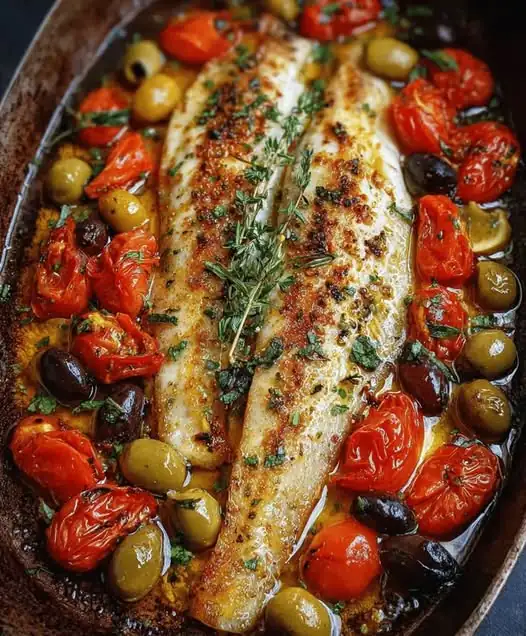
This easy Mediterranean baked white fish is made with juicy cherry tomatoes, mixed olives, garlic, lemon, herbs, and olive oil. A flavorful 30-minute dinner!
Mediterranean Baked White Fish with Tomatoes & Olives
If you need a dinner that tastes like you put in way more effort than you actually did, this Mediterranean Baked White Fish with Tomatoes & Olives is the one.
I usually make this kind of fish when I want something light but still satisfying. You know those evenings when you’re hungry, don’t want a pile of dishes, and definitely don’t feel like spending an hour cooking? That’s exactly when this recipe comes in handy.
The fish bakes gently with sweet cherry tomatoes, briny olives, garlic, lemon, oregano, and plenty of good olive oil. As everything cooks, the tomatoes soften and release their juices, creating this incredibly flavorful little sauce around the fish.
Honestly, the combination is hard to beat. The fish stays tender and flaky, the tomatoes become wonderfully jammy, and the olives add just enough salty, savory flavor to make every bite interesting.
And the best part? This Mediterranean baked fish is on the table in about 30 minutes.
Why You’ll Love This Mediterranean Baked Fish
- Quick and easy: Perfect for busy weeknights.
- One-pan recipe: Less cleanup is always a win in my kitchen.
- Fresh Mediterranean flavors: Lemon, garlic, herbs, tomatoes, and olives do all the heavy lifting.
- Light but filling: A great alternative to heavier dinners.
- Naturally gluten-free: No breadcrumbs or flour needed.
- Easy to customize: Use your favorite mild white fish and whatever olives you have on hand.
Ingredients
Here’s what you’ll need to make this easy baked white fish recipe:
For the Fish
- 2 white fish fillets — cod, haddock, halibut, sea bass, or another firm white fish
- 1 cup cherry tomatoes, halved
- ½ cup mixed olives — green and Kalamata olives work especially well
- 2 tablespoons olive oil
- 2 cloves garlic, minced
- 1 teaspoon dried oregano
- Zest of ½ lemon
- Juice of ½ lemon
- Salt, to taste
- Black pepper, to taste
- Fresh thyme sprigs, for baking and garnish
- 2 tablespoons fresh parsley, chopped
A Quick Note About the Olives
I usually use a mixture of green and Kalamata olives because I love the contrast between them. But honestly, don’t make a special trip to the store if you already have one type of olive in the refrigerator.
Castelvetrano, Kalamata, Niçoise, or even sliced black olives can work beautifully.
How to Make Mediterranean Baked White Fish
1. Preheat the oven
Preheat your oven to 400°F (200°C).
Lightly grease a baking dish with a little olive oil.
I like using a dish that’s just large enough to hold the fish and tomatoes without everything being spread too thinly.
2. Prepare the tomatoes and olives
Add the halved cherry tomatoes and olives to the baking dish.
Drizzle with about half of the olive oil and add the minced garlic, oregano, lemon zest, a little salt, and black pepper.
Give everything a gentle toss.
At this point, your kitchen is already going to smell pretty good.
3. Season the fish
Pat the fish fillets dry with paper towels. This little step is worth doing because removing excess moisture helps the fish season properly and bake rather than steam.
Place the fillets in the center of the baking dish, nestled among the tomatoes and olives.
Drizzle the fish with the remaining olive oil.
Season generously with salt, black pepper, and a little extra oregano if desired.
4. Add lemon and thyme
Squeeze the juice from half a lemon over the fish and vegetables.
Tuck a few fresh thyme sprigs around and on top of the fish.
I love adding the lemon before baking because it flavors everything as it cooks, but I also like saving a small lemon wedge for serving.
5. Bake
Place the dish in the preheated oven and bake for approximately 12–18 minutes, depending on the thickness of your fish fillets.
The fish is ready when it flakes easily with a fork and reaches an internal temperature of 145°F (63°C).
Thicker fillets may need a few extra minutes, while thinner fillets can cook surprisingly quickly, so start checking early.
6. Finish with parsley
Remove the baking dish from the oven and let the fish rest for a couple of minutes.
Sprinkle the chopped fresh parsley over everything.
Spoon some of the warm tomato, olive, garlic, and lemon juices over the fish before serving.
This is the part where I usually grab a piece of crusty bread because there is absolutely no way I’m letting that delicious sauce go to waste.
Cooking Tips for the Best Mediterranean Baked Fish
Choose a firm white fish
Cod is my usual choice because it’s mild, flaky, and easy to find. Haddock, halibut, sea bass, and other firm white fish can work too.
Just remember that different fish and fillet thicknesses cook at different speeds.
Don’t skip the olive oil
The olive oil isn’t just there for flavor. It helps keep the fish moist while also carrying the flavors of the garlic, oregano, lemon, and herbs throughout the dish.
Pat the fish dry
This takes about 30 seconds but makes a difference. Patting the fillets dry removes excess surface moisture and helps the seasoning stick.
Don’t overbake the fish
This is probably the biggest thing to watch.
White fish can go from perfectly tender to dry fairly quickly. I usually start checking around the 12-minute mark, especially if the fillets are thin.
Taste the olives before seasoning
Some olives are much saltier than others. Because of that, I recommend starting with a modest amount of salt and adjusting after cooking if needed.
Use fresh lemon at the end
Even though we’re baking the fish with lemon juice, a final little squeeze of fresh lemon right before eating really brightens the whole dish.
Let the tomatoes get a little soft
Don’t worry if the tomatoes wrinkle and burst slightly in the oven. That’s exactly what you want. Their juices mix with the olive oil, garlic, and lemon to create a simple sauce for the fish.
What Type of White Fish Can I Use?
You have quite a few options.
Cod: Mild, flaky, and probably my favorite everyday choice.
Haddock: Slightly more delicate but excellent for baking.
Halibut: Meaty and firm, with a more substantial texture.
Sea bass: Richer and wonderfully tender.
Pollock: A budget-friendly option with a mild flavor.
The key is to adjust the cooking time based on the thickness of the fillets rather than relying solely on the clock.
Serving Suggestions
This Mediterranean fish is delicious straight from the baking dish, but there are plenty of ways to turn it into a more complete meal.
Serve it with crusty bread
This is honestly my favorite option. The bread soaks up the garlicky tomato and olive juices beautifully.
Add rice
Serve the fish and vegetables over fluffy white rice, brown rice, or lemon rice.
Try couscous
A simple couscous makes an especially good pairing because it absorbs all those flavorful juices.
Add a fresh salad
A simple cucumber and tomato salad with lemon and olive oil keeps the whole meal fresh and light.
Serve with roasted vegetables
Roasted zucchini, asparagus, broccoli, or bell peppers would all work well.
Add potatoes
For a heartier dinner, serve with roasted baby potatoes or crispy Greek-style potatoes.
How to Store Leftovers
If you have leftovers, allow them to cool and refrigerate them in an airtight container.
They are best enjoyed within 2–3 days.
To reheat, warm the fish gently in a low oven or microwave until heated through. I recommend avoiding high heat because it can make the fish dry.
If you know you’ll have leftovers, I usually prefer slightly undercooking the fish initially and reheating it gently later.
Approximate Nutrition Information
Per serving, assuming 2 servings and using a typical lean white fish:
- Calories: approximately 350–400
- Protein: approximately 38–42 g
- Fat: approximately 20–23 g
- Carbohydrates: approximately 8–10 g
- Fiber: approximately 2 g
- Sugar: approximately 4–5 g
- Sodium: approximately 700–900 mg
Nutrition information is an estimate and will vary depending on the type and size of fish, olives, and amount of olive oil used.
Frequently Asked Questions
1. Can I use frozen white fish?
Yes. Frozen fish works well, but I recommend thawing it completely in the refrigerator first and patting it very dry before cooking.
If you bake the fish straight from frozen, the cooking time will be longer and the tomatoes may cook differently.
2. Can I use salmon instead of white fish?
Absolutely. Salmon isn’t a white fish, but the Mediterranean combination of tomatoes, olives, garlic, lemon, and herbs works beautifully with it.
You’ll just want to adjust the cooking time according to the thickness of the salmon.
3. Do I need to remove the skin from the fish?
No. If your fillets have skin, you can leave it on. Place the fish skin-side down in the baking dish.
The skin can help protect the fish while it cooks and can become nicely browned if finished under a broiler.
4. Can I make this recipe without olives?
Definitely. If you’re not an olive fan, simply leave them out. You can add extra cherry tomatoes, roasted red peppers, artichoke hearts, or capers instead.
If you like capers, they’re especially good here because they provide a similar salty, briny quality.
5. How do I know when baked white fish is done?
The easiest method is to check the thickest part with an instant-read thermometer. Fish should reach 145°F (63°C).
It should also look opaque and flake easily with a fork. Try not to rely on appearance alone, particularly with very thick fillets.
Final Thoughts
This Mediterranean Baked White Fish with Tomatoes & Olives has become the kind of recipe I reach for when I want dinner to feel fresh, flavorful, and a little special without making a big production out of it.
I love that the ingredients are simple, but once they all bake together, they create so much flavor. The sweet tomatoes, salty olives, fragrant garlic, lemon, oregano, and olive oil turn a couple of simple fish fillets into something that tastes wonderfully Mediterranean.