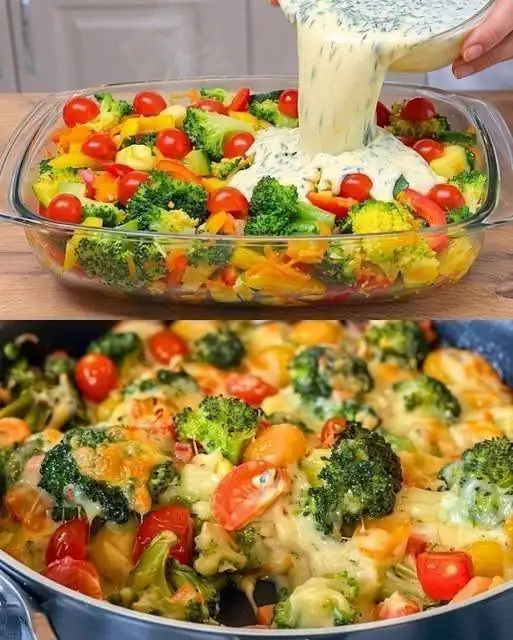
I love recipes that make eating more vegetables feel like a treat rather than a chore. This low-calorie vegetable casserole is one of those dishes I keep coming back to when I want something warm, filling, and comforting without making a super-heavy dinner.
I usually make a big dish at the beginning of the week and keep the leftovers in the fridge for quick lunches or dinners. Honestly, having something healthy already prepared makes it much easier for me to avoid reaching for takeout when I’m hungry.
This casserole is packed with colorful vegetables, a light creamy sauce, and just enough cheese to make everything bubbly and golden on top. It’s satisfying without relying on lots of butter, cream, or heavy ingredients.
One note: no single casserole can make you “lose weight quickly.” Weight change depends on your overall food intake, activity, and individual circumstances. This recipe can, however, fit nicely into a calorie-conscious eating pattern because it provides plenty of vegetables for relatively few calories.
Why You’ll Love This Vegetable Casserole
-
Loaded with vegetables for plenty of color, texture, and flavor
-
Light and creamy without a heavy cream-based sauce
-
Easy to prepare with everyday ingredients
-
Great for meal prep and leftovers
-
Naturally satisfying thanks to the combination of vegetables, protein, and cheese
-
Customizable with whatever vegetables you have in the refrigerator
Ingredients
For the Vegetable Casserole
-
2 cups broccoli florets
-
1½ cups cauliflower florets
-
1 medium zucchini, chopped
-
1 large carrot, thinly sliced
-
1 red bell pepper, chopped
-
1 cup cherry tomatoes, halved
-
½ small onion, diced
-
2 cloves garlic, minced
-
1 teaspoon olive oil
-
½ teaspoon salt
-
½ teaspoon black pepper
-
½ teaspoon paprika
-
½ teaspoon Italian seasoning
For the Light Creamy Sauce
-
¾ cup plain Greek yogurt
-
½ cup low-fat milk
-
1 tablespoon cornstarch
-
1 teaspoon Dijon mustard
-
½ teaspoon garlic powder
-
¼ teaspoon black pepper
-
½ cup shredded reduced-fat mozzarella
-
2 tablespoons grated Parmesan
For the Topping
-
½ cup shredded reduced-fat mozzarella
-
1 tablespoon Parmesan
-
1 tablespoon chopped fresh parsley, optional
How to Make Low-Calorie Vegetable Casserole
1. Prepare the Vegetables
Preheat your oven to 400°F (200°C).
Wash and chop all of your vegetables into reasonably similar-sized pieces.
I usually cut the broccoli and cauliflower into small florets because they cook more evenly that way. Keep the cherry tomatoes a little larger so they don’t completely disappear during baking.
2. Partially Cook the Broccoli and Cauliflower
Bring a pot of water to a boil.
Add the broccoli and cauliflower and cook for about 2–3 minutes.
Drain them well and let them steam-dry for a few minutes.
This quick step helps the vegetables become tender in the casserole without requiring a long baking time.
Don’t overcook them here. You want them slightly crisp because they’ll continue cooking in the oven.
3. Make the Creamy Sauce
In a bowl, whisk together the Greek yogurt, milk, cornstarch, Dijon mustard, garlic powder, and black pepper.
Stir in ½ cup mozzarella and 2 tablespoons Parmesan.
The Greek yogurt gives the sauce a creamy texture while keeping it considerably lighter than a traditional sauce made primarily with heavy cream.
If the mixture looks very thick, add another tablespoon or two of milk.
4. Season the Vegetables
Place the broccoli, cauliflower, zucchini, carrot, bell pepper, tomatoes, and onion in a large bowl.
Add the minced garlic, olive oil, salt, pepper, paprika, and Italian seasoning.
Toss everything together until the vegetables are evenly coated.
I usually don’t add much oil here. The sauce and cheese provide plenty of richness, so a small amount is enough to help everything roast nicely.
5. Assemble the Casserole
Lightly spray a 9 × 13-inch baking dish with cooking spray.
Add the seasoned vegetables and spread them into an even layer.
Pour the creamy sauce over the vegetables.
Gently toss everything together so the sauce gets into all those little spaces between the vegetables.
Sprinkle the remaining mozzarella and Parmesan over the top.
6. Bake Until Golden and Bubbly
Place the casserole in the preheated oven.
Bake for approximately 25–30 minutes, or until the vegetables are tender and the cheese is melted and lightly golden.
If you want a more browned top, switch on the broiler for the final 1–2 minutes.
Keep a close eye on it because cheese can go from beautifully golden to burnt surprisingly quickly.
7. Rest and Serve
Remove the casserole from the oven and let it rest for about 5 minutes.
Sprinkle with fresh parsley if you like.
Then serve it while it’s warm and bubbly.
Honestly, this is one of those dishes where I always think I’ll eat just one serving—and then go back for a little more.
Cooking Tips for the Best Vegetable Casserole
Don’t make the vegetables too small
Tiny pieces can become mushy during baking. Medium-sized pieces give you a much nicer texture.
Remove excess moisture
Vegetables such as zucchini and tomatoes naturally contain quite a bit of water. Don’t skip draining the blanched vegetables, and avoid adding an excessive amount of sauce.
Use Greek yogurt for creaminess
Plain Greek yogurt is an easy way to make the sauce creamy while adding protein. I prefer unsweetened yogurt for this recipe.
Don’t go overboard with cheese
You don’t need a huge layer of cheese to make this casserole delicious. A moderate amount melts beautifully over the vegetables while keeping the overall calorie count more reasonable.
Add protein if you want a complete meal
For a more substantial casserole, add cooked chicken breast, turkey, beans, lentils, or chickpeas.
Adjust the vegetables
This recipe is very forgiving. Mushrooms, spinach, green beans, peas, asparagus, or cabbage can all work well.
Serving Suggestions
This vegetable casserole works as either a light main dish or a side dish.
For a more complete meal, I usually serve it with:
-
Grilled chicken breast
-
Baked fish
-
Roasted turkey
-
Grilled tofu
-
Lentils or chickpeas
-
A simple green salad
If you’re keeping the meal vegetarian, adding chickpeas or white beans is an easy way to increase the protein and make the casserole more filling.
For lunch, I like serving a smaller portion alongside a fresh salad and a piece of whole-grain toast.
Can You Make This Casserole Ahead?
Absolutely.
You can assemble the casserole several hours ahead of time, cover it, and refrigerate it until you’re ready to bake.
If you’re preparing it the night before, I’d recommend keeping the tomatoes and sauce separate until closer to baking time if possible. This helps prevent the vegetables from releasing too much liquid.
Leftovers can be refrigerated in an airtight container for approximately 3–4 days.
Reheat individual portions in the microwave or warm the entire casserole in a 350°F (175°C) oven until heated through.
Approximate Nutrition Information
Per serving, based on 6 servings:
-
Calories: approximately 250–280
-
Protein: approximately 15–18 g
-
Carbohydrates: approximately 25–30 g
-
Fat: approximately 9–11 g
-
Fiber: approximately 6–8 g
-
Sugar: approximately 9–11 g
-
Sodium: approximately 450–600 mg
Nutrition is an estimate and will vary according to the exact vegetables, dairy products, cheese, and portion sizes used.
For a lower-calorie version, reduce the cheese slightly and use nonfat Greek yogurt and low-fat milk.
Frequently Asked Questions
1. Is vegetable casserole good for weight loss?
A vegetable casserole can be part of a weight-management diet, particularly when it’s built around vegetables and reasonable portions of calorie-dense ingredients such as cheese and oil. However, no single food causes rapid weight loss. Overall calorie intake, nutrition, physical activity, and individual factors matter.
2. Can I make this casserole without cheese?
Yes. You can leave out the cheese or use a small amount of nutritional yeast for a savory flavor. You can also make the sauce with Greek yogurt and seasonings alone.
3. Can I use frozen vegetables?
Definitely. Frozen broccoli, cauliflower, and mixed vegetables can save a lot of preparation time. Thaw and drain them well first so the casserole doesn’t become watery.
4. How can I make this vegetable casserole higher in protein?
Add cooked chicken, turkey, tofu, chickpeas, lentils, or white beans. You can also increase the Greek yogurt in the sauce slightly, provided you adjust the consistency with a little milk.
5. Why is my casserole watery?
The most common reason is excess moisture from vegetables, especially zucchini, tomatoes, and frozen vegetables. Drain blanched or thawed vegetables thoroughly, avoid overcrowding the baking dish, and don’t use more sauce than necessary.
Final Thoughts
This low-calorie vegetable casserole is proof that lighter food doesn’t have to be boring.
I usually make it when I have a refrigerator full of vegetables that need using, and somehow they always taste better once they’re baked together under that creamy, cheesy topping. The broccoli gets tender, the tomatoes become sweet and juicy, and the golden cheese on top brings everything together.