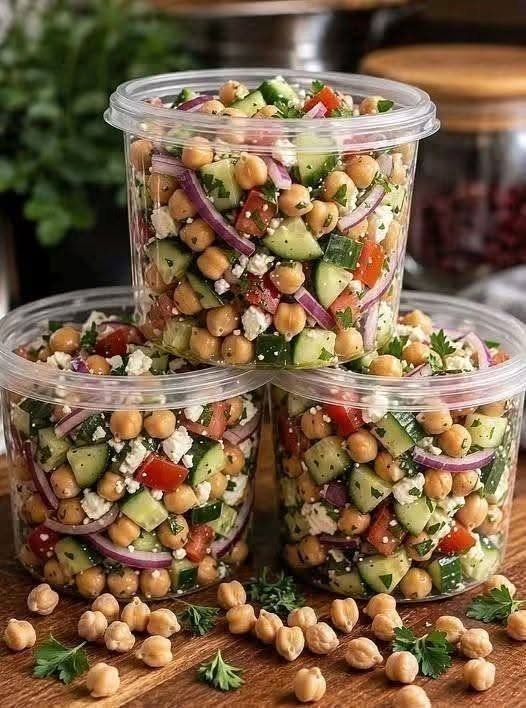
I have a soft spot for salads that actually keep me full, and honestly, this chickpea cucumber salad has become one of my favorites.
I usually make a big batch when I want something fresh and crunchy in the fridge that I can grab for lunch without cooking. The combination of creamy chickpeas, crisp cucumber, juicy tomatoes, sharp red onion, salty feta, and fresh herbs makes every bite interesting.
And the dressing couldn’t be easier—just lemon juice, olive oil, garlic, and a few simple seasonings.
You’ll sometimes see salads like this described online as a “detox salad” or as something that specifically burns belly, neck, arm, back, or thigh fat. I wouldn’t make those claims. No individual salad can selectively burn fat from particular areas, and your body doesn’t need a special food to “clean” or detox the gut. What this salad can do is provide fiber, vegetables, plant-based protein, and unsaturated fats, making it a nutritious option for an overall balanced eating pattern.
Why I Love This Salad
-
High in fiber from chickpeas and vegetables
-
Plant-based protein makes it more satisfying than a plain green salad
-
Fresh and crunchy with lots of different textures
-
Easy meal prep for lunches and quick dinners
-
No complicated cooking required
-
Naturally colorful and packed with everyday ingredients
-
Easy to customize depending on what’s in your refrigerator
Ingredients
For the Salad
-
2 cans (15 oz each) chickpeas, drained and rinsed
-
2 medium cucumbers, diced
-
2 medium tomatoes, diced
-
½ small red onion, thinly sliced
-
½ cup crumbled feta cheese
-
¼ cup fresh parsley, chopped
-
2 tablespoons fresh mint, chopped, optional
-
1 small bell pepper, diced, optional
For the Lemon Dressing
-
3 tablespoons extra-virgin olive oil
-
2 tablespoons fresh lemon juice
-
1 small garlic clove, finely minced
-
1 teaspoon Dijon mustard
-
½ teaspoon dried oregano
-
¼ teaspoon black pepper
-
¼ teaspoon salt, or to taste
How to Make Chickpea Cucumber Salad
1. Prepare the Chickpeas
Drain and rinse the chickpeas thoroughly under cool running water.
I usually give them a little shake in a colander to remove as much excess water as possible. If you have a few extra minutes, pat them gently with a clean kitchen towel.
This keeps the finished salad from becoming watery.
2. Chop the Vegetables
Dice the cucumbers and tomatoes into bite-sized pieces.
Thinly slice the red onion and chop the parsley and mint.
If raw onion tastes a little too strong for you, here’s an easy trick: place the sliced onion in cold water for about 5–10 minutes, then drain it well.
It takes away some of that sharp bite while keeping the onion crunchy.
3. Make the Dressing
In a small bowl or jar, combine, I prefer making dressing this way instead of buying bottled dressing. It takes about two minutes and you can adjust the lemon, salt, and garlic:
-
Olive oil
-
Fresh lemon juice
-
Dijon mustard
-
Garlic
-
Oregano
-
Black pepper
-
Salt
Whisk or shake until everything is combined.
Honestly, I prefer making dressing this way instead of buying bottled dressing. It takes about two minutes and you can adjust the lemon, salt, and garlic exactly to your taste.
4. Combine Everything
Add the chickpeas, cucumber, tomatoes, red onion, parsley, mint, and bell pepper to a large mixing bowl.
Pour the lemon dressing over everything.
Gently toss until the vegetables and chickpeas are evenly coated.
Finally, fold in the crumbled feta.
Try not to stir too aggressively—you want the cucumber and tomatoes to stay chunky rather than turning into a watery mixture.
5. Let the Flavors Come Together
You can eat the salad immediately, but I usually let it sit in the refrigerator for 15–30 minutes.
That little resting period makes a noticeable difference. The chickpeas absorb some of the lemony dressing, while the herbs and vegetables have time to mingle.
Give it another gentle toss just before serving.
Cooking Tips
Don’t skip rinsing the chickpeas
Canned chickpeas can have a slightly salty liquid around them. Rinsing removes that and gives you a cleaner flavor.
Choose firm cucumbers
English cucumbers or Persian cucumbers work especially well because they’re crisp and relatively mild.
Add the feta last
Feta can break apart if you toss the salad too aggressively. Folding it in at the end keeps some nice chunks throughout the salad.
Taste before adding more salt
Feta is naturally salty, so you may need less additional salt than you expect.
Make it more filling
If you’re serving this as a main meal, add grilled chicken, tuna, hard-boiled eggs, tofu, or extra chickpeas.
Watch the portion of dressing
Olive oil is nutritious, but it’s also calorie-dense. If you’re paying attention to calories, measuring the oil rather than pouring it freely can make a significant difference.
Is This a Detox Salad?
The word “detox” gets used a lot in recipes like this, but there’s an important distinction.
Your liver, kidneys, digestive tract, and other systems already handle the body’s normal waste-processing functions. You don’t need a particular salad to “flush toxins” from your body.
What makes this recipe worthwhile is much simpler: it’s a nutrient-dense way to eat more vegetables and fiber.
Chickpeas provide fiber and plant protein, while cucumber, tomatoes, onion, herbs, and lemon contribute a variety of nutrients and flavors.
If you’re trying to isn’t a food that specifically melts fat from your abdomen, neck, arms, back, or thighs. Where the body stores and loses fat is influenced by factors including genetics, hormones, improve your overall diet, meals like this can be a useful addition.
Can This Salad Help With Weight Management?
It can certainly fit into a weight-management eating pattern, but I wouldn’t call it a fat-burning salad.
There isn’t a food that specifically melts fat from your abdomen, neck, arms, back, or thighs. Where the body stores and loses fat is influenced by factors including genetics, hormones, overall energy intake, and activity.
This salad can nevertheless be a smart choice because its combination of fiber, vegetables, and protein can make a meal satisfying without requiring large amounts of highly processed ingredients.
For weight management, the overall pattern of what you eat matters much more than one particular recipe.
Serving Suggestions
I love this salad straight from the refrigerator, but there are plenty of ways to serve it.
For lunch
Serve a generous bowl with whole-grain pita or toasted whole-grain bread.
As a side dish
It pairs beautifully with:
-
Grilled chicken
-
Baked salmon
-
Grilled shrimp
-
Roasted vegetables
-
Chicken kebabs
-
Baked tofu
For meal prep
Divide the salad into individual containers for easy lunches.
If you’re preparing several days’ worth, consider keeping the dressing separate and adding it shortly before eating for the crispest vegetables.
Turn it into a wrap
Spoon the salad into a whole-wheat tortilla with lettuce and a little extra feta.
It’s surprisingly good.
How to Store It
Keep the salad refrigerated in an airtight container.
For the best texture, I recommend eating it within 3–4 days.
The cucumbers and tomatoes will gradually release liquid, so give the salad a good stir before serving.
If you’re meal-prepping, storing the dressing separately will help the vegetables remain crisp for longer.
Approximate Nutrition Information
Per serving, assuming 6 servings:
-
Calories: approximately 280–320
-
Protein: approximately 9–11 g
-
Carbohydrates: approximately 30–35 g
-
Fat: approximately 14–17 g
-
Fiber: approximately 8–10 g
-
Sugar: approximately 5–7 g
-
Sodium: approximately 450–600 mg
Nutrition is an estimate and will vary depending on the brands of chickpeas and feta, the amount of olive oil used, and serving size.
Frequently Asked Questions
1. Can I eat this salad every day?
You can include it regularly if you enjoy it and it fits your overall diet. I usually prefer rotating ingredients and meals so I get a wider variety of foods and nutrients throughout the week.
2. Does this salad burn belly fat?
No food can specifically target belly fat. Fat loss occurs throughout the body according to your individual biology rather than because a particular food targets one area. This salad can be part of a balanced, calorie-conscious diet.
3. Are chickpeas good for digestion?
Chickpeas are a good source of dietary fiber, which supports normal bowel function. However, if you’re not used to eating much fiber, a large serving may initially cause gas or bloating. Starting with smaller portions and increasing fiber gradually can help.
4. Can I make this salad without feta?
Absolutely. Leave it out for a dairy-free version, or substitute avocado, olives, or a dairy-free feta-style cheese. If you remove the feta, you may want to add a little extra seasoning.
5. How can I make this salad higher in protein?
Add grilled chicken, tuna, salmon, eggs, tofu, or additional chickpeas. Greek yogurt-based dressing can also increase the protein content while giving the salad a creamy texture.
Final Thoughts
This chickpea cucumber salad with feta isn’t a magical detox or a shortcut to rapid fat loss—and honestly, I think it’s better to appreciate it for what it actually is: a fresh, flavorful, fiber-rich a container in the fridge for those days when I want something quick but don’t want another boring sandwich. The crunchy cucumber, juicy tomatoes, creamy chickpeas, salty feta, and bright lemon dressing make meal that’s incredibly easy to make.